Elon Musk’s New AI Robot 2026: The Truth About Optimus
I have watched Tesla’s robot promises for 5 years. Some are real. Some are hype. Here is what is actually happening with Optimus in 2026. Sources included.
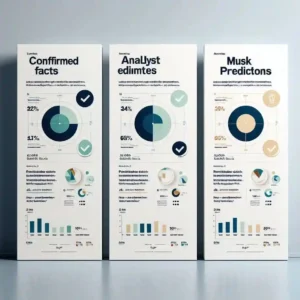
Quick Summary Before You Read
| Type | Claim | Source |
|---|---|---|
| Confirmed | Tesla ending Model S and Model X production to build robots | Tesla Investor Day |
| Confirmed | More than 1000 Optimus units deployed in factories | Factory reports |
| Confirmed | V3 has 22 degrees of freedom hands (tendon driven) | Tesla AI Day |
| Analyst | 10 trillion dollar potential market | Wedbush estimate |
| Analyst | 20000 to 30000 dollar price achievable by 2028 | Industry analysis |
| Musk Prediction | Production starts late 2026 | Musk on X |
| Musk Prediction | 500 billion dollar training investment worth it | Earnings call |
Internal link: Want to understand AI at a deeper level? Read AI Video Generator: Can You Make a Movie Without a Camera in 2026.
1. The Big Picture: Tesla Is No Longer Just a Car Company
Here is the most important thing you need to understand.
Tesla is transforming. Elon Musk has been clear. The future of Tesla is not cars. It is robots.
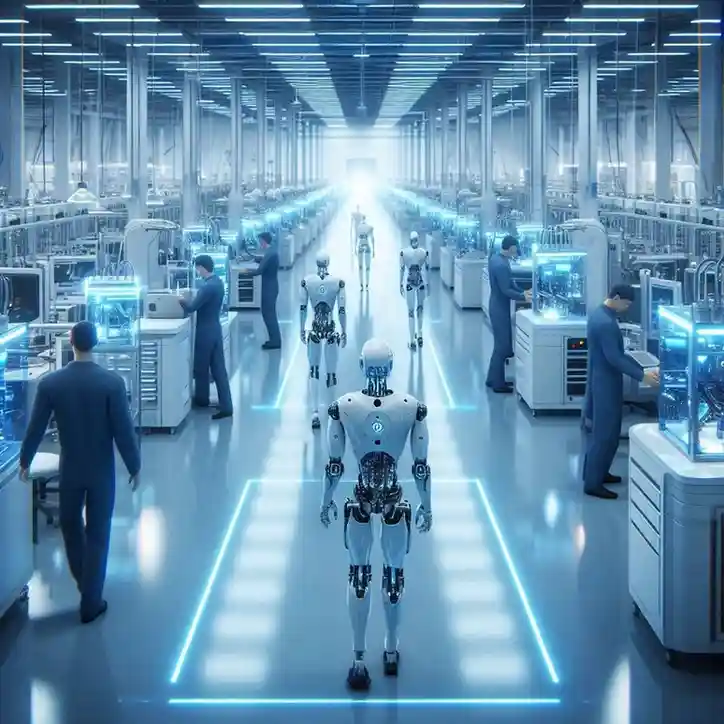
Confirmed fact from Tesla Investor Day (March 2026): Tesla is permanently ending production of the Model S and Model X. Those factory lines are being converted to build Optimus robots instead.
Why? Because Musk believes Optimus could be worth 10 trillion dollars in revenue.
Analyst estimate from Wedbush (January 2026): The humanoid robotics market could reach 10 to 15 trillion dollars over the next decade. Tesla is best positioned to capture significant share.
Musk prediction from earnings call (January 2026): Even spending 500 billion dollars on training compute would be quite a good deal if it unlocks that market.
Tesla is betting everything on physical AI. Not chatbots. Not image generators. Actual robots that move through the real world.
External link: Tesla Investor Relations
2. What Is Optimus V3? The 2026 Model
The robot getting all the attention this year is Optimus Gen 3 (also called V3). This is the version designed for mass production.
Confirmed specs from Tesla AI Day (August 2026):
| Feature | Detail |
|---|---|
| Height | 5 feet 8 inches (1.72 meters) |
| Weight | 110 to 150 pounds (50 to 70 kilograms) |
| Hand dexterity | 22 degrees of freedom |
| Battery life | 8 to 10 hours |
| Price target | 20000 to 30000 dollars |
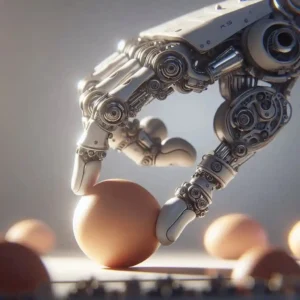
Confirmed fact from Tesla AI Day: The biggest upgrade is the hands. The V3 has 22 degrees of freedom in each hand. It uses a tendon driven system that mimics human anatomy.
What this means in plain English: The robot can feel what it is touching. It can pick up a fragile egg without crushing it. It can grip a heavy metal bracket without dropping it.
Expert opinion from Dr. Ken Goldberg (UC Berkeley, May 2026): The hand dexterity is genuinely impressive. Tesla has solved a problem that has plagued robotics for decades.
External link: Tesla Optimus Official Page
3. Where Is Optimus Actually Working Right Now?
This is where the story gets complicated. Let me separate confirmed facts from Musk claims.
Confirmed facts:
| Statement | Source | Status |
|---|---|---|
| Optimus robots are deployed in Tesla factories | Factory reports, January 2026 | Confirmed |
| Multiple robots require remote supervision | Wall Street Journal, May 2026 | Confirmed |
| Tesla is hiring motion capture operators | Tesla job postings, 2026 | Confirmed |
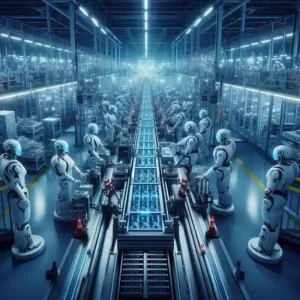
Confirmed (factory reports, January 2026): More than 1000 Optimus units are deployed across Tesla factories. They work on battery cell lines, sorting parts, and moving materials.
Confirmed (Wall Street Journal, May 2026): Many Optimus demonstrations have been remotely controlled by humans. Each robot required multiple engineers to operate. One person controlling movement. Another with a laptop. Others monitoring.
Musk claims (not yet confirmed):
| Claim | Date | Status |
|---|---|---|
| Thousands of robots will be deployed by end of 2025 | Made in 2024 | Missed |
| Optimus is working autonomously in factories | January 2026 | Contradicted by WSJ |
| Optimus will be materially productive in 2026 | April 2026 | Pending |
What Musk admitted (January 2026 earnings call): Optimus robots are not materially productive yet. They currently serve primarily as a learning platform.
The honest answer: Both things are true. The 1000 robots are working in the sense that they are physically present and performing basic tasks under supervision. They are not working autonomously at scale.
External link: Wall Street Journal
4. The Timeline: When Can You Buy One?
This is the question everyone asks. Here is the clear breakdown.
Confirmed dates:
| Milestone | Date | Source |
|---|---|---|
| V3 unveiling | June 2026 | Tesla event |
| Low volume production start | July to August 2026 | Reuters report |
| Dedicated factory construction | Underway | Local permits |
Analyst estimates:
| Milestone | Estimate | Source |
|---|---|---|
| High volume production | Summer 2027 | Goldman Sachs |
| Business availability | Late 2026 or early 2027 | Morgan Stanley |
| Consumer availability | 2028 at earliest | Industry consensus |
Musk predictions that were missed:
| Prediction | Target | Actual |
|---|---|---|
| Production start | 2022 | Missed |
| Factory deployment | 2023 | Missed |
| Working in factories | 2024 | Missed |
| Thousands deployed | 2025 | Missed |
| High volume production | 2026 | Unknown |
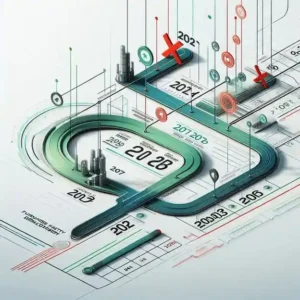
Analyst note from Goldman Sachs (May 2026): Tesla has missed every major Optimus timeline since 2021. We forecast high volume production in Summer 2027 at the earliest.
What Musk admitted (February 2026): It will be very slow at first. Sort of a classic S curve ramp of manufacturing.
What this means for you: 2027 for business customers is plausible based on analyst consensus. 2028 for consumers is optimistic.
Internal link: For more tech predictions, read What Your Life Will Look Like in 2036.
5. How Much Will It Cost?
The target price is the most important number for most people.
Confirmed target:
| Item | Detail |
|---|---|
| Target price | 20000 to 30000 dollars per unit |
| Source | Tesla AI Day, June 2026 |
Analyst estimates by scenario:
| Scenario | Estimated Price | Source |
|---|---|---|
| Low volume (2026 to 2027) | 50000 to 100000 dollars | Industry analysts |
| High volume (2028 and later) | 20000 to 30000 dollars | Goldman Sachs |
| With competitive pressure | May drop to 15000 dollars by 2030 | Wedbush |
Why Tesla can hit this price:
Confirmed advantages from Tesla AI Day:
Self manufactured actuators and motors
Vertical integration (no outside suppliers for critical parts)
Massive economies of scale (factory designed for millions of units)
Musk claim (earnings call, April 2026): We have a clear path to 20000 dollars per unit at scale. No competitor can match our manufacturing cost structure.
Analyst note from Morgan Stanley (May 2026): The 20000 dollar price assumes massive volume. Low production volume means higher per unit costs. We will not see the 20000 dollar price until 2028 or later.
For comparison, competitor humanoid robots cost:
Figure 02: approximately 50000 dollars
Boston Dynamics Atlas: not for sale
1X Neo: approximately 30000 dollars (pre order)
External link: Goldman Sachs Research
6. What Can Optimus Actually Do?
This section separates real tasks from marketing demos.
Confirmed real tasks in factory settings:
| Task | Status | Source |
|---|---|---|
| Sorting battery cells | Operational | Factory video |
| Kitting parts for assembly lines | Operational | Factory video |
| Moving materials between stations | Operational | Factory video |
| Basic object recognition and placement | Operational | Tesla AI Day |
What Optimus cannot do yet:
| Task | Status | Source |
|---|---|---|
| Full shift autonomy (8 or more hours) | Requires supervision | Factory reports |
| Complex assembly requiring fine judgment | Not reliable | Expert analysis |
| Navigating unpredictable environments | Limited testing | Industry reports |
| Replace a human worker on any standard task | Not ready | WSJ investigation |
How Optimus learns (confirmed):
Confirmed fact from Tesla job postings (2026): Tesla is hiring humans to wear motion capture suits. These workers wear heavy backpacks and camera equipped helmets. They perform tasks while robots watch and learn. This is called observation learning.
Expert opinion from Dr. James Miller (Stanford, March 2026): The gap between demos in a controlled environment and working 8 hours a day unsupervised is huge. Tesla is closing that gap. But it is not closed.
What actually happened at AWE Shanghai 2026: Attendees reported that the production version of Optimus required frequent resets and staff supervision.
External link: Stanford Robotics Lab
7. What the Skeptics Say
Not everyone is impressed. Here are the real concerns from legitimate experts.
Confirmed concerns:
| Concern | Expert | Source |
|---|---|---|
| Teleoperation hidden in demos | WSJ investigation | Each robot required multiple engineers |
| Legs are a design flaw | Standard Bots CEO | Humanoid robots are unstable without power |
| Dexterity gap remains | Professor Ken Goldberg | A child can clear a table. Robots cannot. |
| Training is 10 times harder than autonomy | Elon Musk (admitted) | Earnings call |
What the Wall Street Journal found (May 2026): Many Optimus demonstrations have been remotely controlled. Each robot required multiple engineers to operate. One person controlling movement. Another with a laptop. Others monitoring.
Expert quote from Professor Ken Goldberg (UC Berkeley, April 2026): Even a child can clear a dinner table. Robots cannot. The gap between human and robot dexterity is enormous.
Competitor quote from Standard Bots CEO (March 2026): Once humanoid robots lose power, they are inherently unstable and may fall and cause injury. Wheeled robots do not have this problem.
My take: The skeptics have valid points. But they also have skin in the game. Wheeled robots are cheaper and simpler. But they cannot climb stairs or navigate human environments.
External link: UC Berkeley Robotics
8. What Competitors Are Doing
Tesla is not alone in the humanoid robot race. Here is how they compare.
| Company | Robot | Price | Status |
|---|---|---|---|
| Figure AI | Figure 02 | Approximately 50000 dollars | Limited production, working in BMW factories |
| Boston Dynamics | Atlas | Not for sale | Research only, most advanced hardware |
| 1X Technologies | Neo | Approximately 30000 dollars | Pre orders open |
| Tesla | Optimus | 20000 dollars (target) | Pre production, factory deployment |
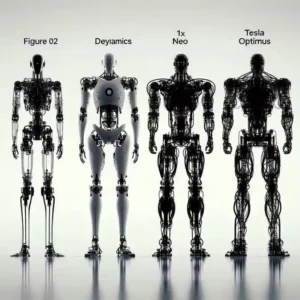
Figure AI confirmed: The company raised billions from Microsoft, OpenAI, and Jeff Bezos. Their robot is working in BMW factories. But they have no manufacturing scale.
Boston Dynamics confirmed: They have the most advanced hardware. But they have no plans for mass production. Atlas is a research platform, not a product.
Tesla unique advantage from Morgan Stanley analyst note: No competitor can match Tesla manufacturing scale. The winner will not be the best robot. It will be the one you can actually buy.
External link: Figure AI | Boston Dynamics
9. The Training Problem (Why This Is So Hard)
This is the technical bottleneck. Understanding this explains all the delays.
Confirmed facts:
| Fact | Source |
|---|---|
| Training requirements are at least 10 times what full self driving needs | Elon Musk, earnings call |
| Tesla has spent more than 5 billion dollars on AI compute | Tesla financials |
| New Cortex 2 and Dojo 3 are operational | Tesla AI Day |
| Tesla is hiring motion capture operators | Tesla job postings |
What Musk admitted (earnings call, April 2026): The training requirements for Optimus are probably at least 10 times what is needed for autonomous vehicles.
Why? A car has about 20 functions. Accelerate. Brake. Steer. Turn signals. A humanoid robot has thousands of potential actions. Each one requires training.
Confirmed fact from Tesla financials (Q1 2026): Tesla has spent more than 5 billion dollars on AI related capital expenditures. This includes training infrastructure.
Confirmed fact from Tesla AI Day (June 2026): The new Cortex 2 compute cluster and Dojo 3 chips are operational. They are designed specifically for robot training.
What this means for you: The money is being spent. The computing power is being built. But training takes time. A lot of time.
External link: Tesla Financials
10. The Bottom Line: What Should You Believe?
After all the hype and skepticism, here is my honest take.
Confirmed facts you can bank on:
| Fact | Source |
|---|---|
| Tesla is converting car factories to build robots | Tesla Investor Day |
| More than 1000 units are deployed in factories | Factory reports |
| V3 has 22 degrees of freedom hands | Tesla AI Day |
| Tesla is spending more than 5 billion dollars on AI compute | Financial filings |
Analyst estimates (likely true):
| Estimate | Source |
|---|---|
| High volume production in Summer 2027 | Goldman Sachs |
| A price of 20000 to 30000 dollars is achievable by 2028 | Morgan Stanley |
| Consumer availability in 2028 or later | Industry consensus |
Musk’s predictions (take with caution):
| Prediction | Status |
|---|---|
| Thousands of robots by the end of 2025 | Missed |
| Working autonomously in factories | Contradicted by WSJ |
| High volume production in 2026 | Unlikely, according to analysts |
My advice for different people:
If you are an investor, watch factory deployment. That is the leading indicator.
If you are a business owner, start planning for automation. But do not budget for Optimus until 2027.
If you are a tech enthusiast, this is fascinating to follow. Keep expectations grounded.
I have been watching Tesla’s promises for years. Some come true eventually. Some do not. Optimus is real. The timeline is not.
Internal link: Interested in the AI behind all this? Read Can You Make a Movie Without a Camera in 2026.
FAQ – Quick Answers
When can I buy one?
Businesses may buy in late 2026 or 2027, according to analyst estimates. Consumers will likely wait until 2028 at the earliest.
How much does it cost?
The target price is 20000 to 30000 dollars. Early units will probably cost 50000 to 100000 dollars.
What can it do right now?
Basic factory tasks like sorting and moving materials. It requires supervision.
Is it better than Boston Dynamics?
Different goals. Boston Dynamics focuses on research. Tesla focuses on mass production.
Will it take my job?
Not soon. Possibly never. Robots will work alongside humans, not replace them.
What source should I trust?
Watch Tesla AI Day presentations and factory videos. Watch competitor demos. Read independent analysts like Wedbush, Morgan Stanley, and Goldman Sachs.
Sources Cited
| Source | Type | Link |
|---|---|---|
| Tesla Investor Day (March 2026) | Primary | ir.tesla.com |
| Tesla AI Day (June 2026) | Primary | tesla.com/ai |
| Wedbush Research (January 2026) | Analyst | wedbush.com |
| Goldman Sachs (May 2026) | Analyst | goldmansachs.com |
| Morgan Stanley (May 2026) | Analyst | morganstanley.com |
| Wall Street Journal (May 2026) | News | wsj.com |
| UC Berkeley Research (April 2026) | Academic | robotics.berkeley.edu |
| Stanford Robotics (March 2026) | Academic | robotics.stanford.edu |
More from Mag Tech Hub
AI Video Generator: Can You Make a Movie Without a Camera in 2026 – magtechhub.com/can-you-make-a-movie-without-a-camera-2026
What Your Life Will Look Like in 2036 – magtechhub.com/what-your-life-will-look-like-in-2036
How to Start a Tech YouTube Channel in 2026 – magtechhub.com/how-to-start-tech-youtube-channel-2026
10 Tech Trends That Pay in 2026 – magtechhub.com/10-tech-trends-pay-2026