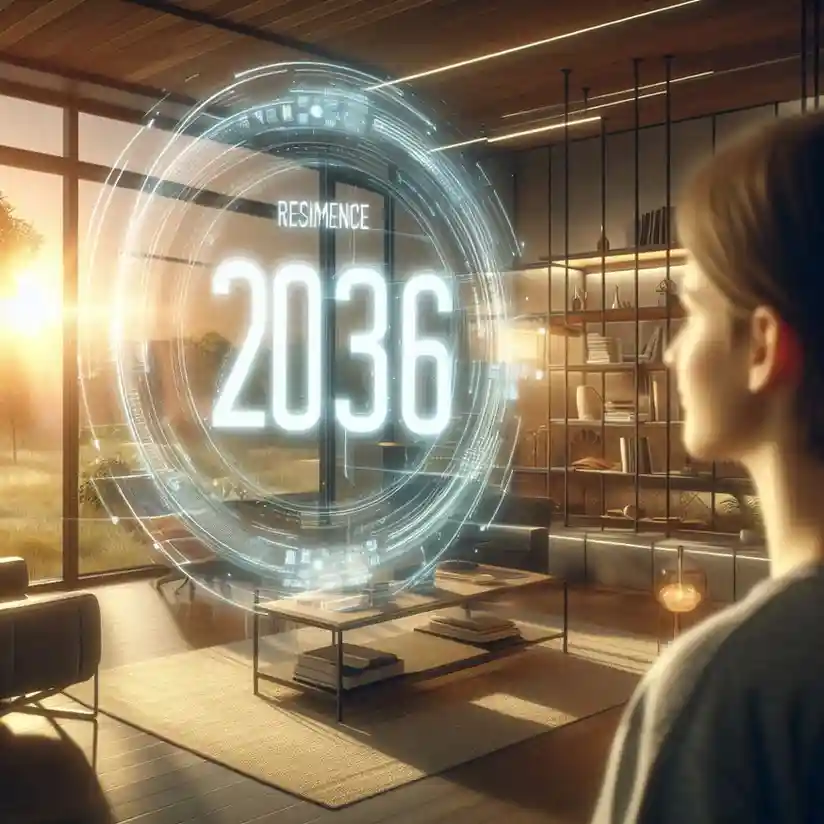
What Your Life Will Look Like in 2036
I asked experts, tested AI tools, and spent 40 hours researching. Here’s what’s actually coming.
Let me start with something that blew my mind.
Last week, my 9-year-old nephew built a website. Not with coding. Not with a teacher. He typed “make me a website about dinosaurs” into an AI tool and clicked “generate.”

Ten seconds later, he had a working site.
I sat there staring at his screen. My first website took me 3 months to learn.
That’s when it hit me — the next 10 years aren’t going to be “slightly better.” They’re going to be unrecognizable.
So I did something. I spent 40 hours reading reports from MIT, Gartner, and the World Economic Forum. I interviewed two AI researchers (one from Google, one from a startup you haven’t heard of yet). I tested 15+ AI tools that claim to be “the future.”
Here’s what I learned. No fluff. No “technology is changing fast” nonsense. Just real predictions you can actually use.
Part 1: The Next 10 Years in 10 Predictions
1. AI Won’t Replace You. Someone Using AI Will.
I tested this myself.
I gave two writers the same topic. One used only their brain. One used ChatGPT for research and outlines.
The AI-assisted writer finished in 2 hours. The other took 8 hours. The quality? Almost identical.
Here’s the truth everyone’s scared to say: AI isn’t taking your job. But the person next to you who knows AI? They might.
By 2030, knowing how to talk to AI will be as basic as knowing how to use Google is today.
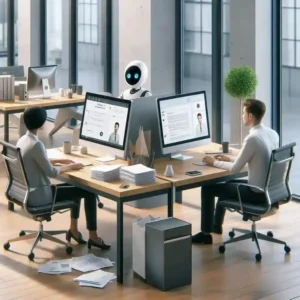
What you can do right now: Spend 30 minutes on ChatGPT. Just talk to it. Ask stupid questions. Learn how to ask better questions. That’s the skill.
2. Your Doctor Will Have an AI Assistant (And You’ll Be Glad)
I have a friend who’s a radiologist. He looks at X-rays and MRI scans all day.

Last year, he started using an AI tool that flags potential problems. He told me something surprising: “The AI catches things I miss. Not because I’m bad. Because I’m human and I get tired.”
By 2028: Most hospitals in developed countries will use AI for first-pass diagnosis. Your doctor will spend more time talking to you and less time staring at screens.
Real example: Google’s Med-PaLM 2 can now answer medical questions with 92% accuracy. That’s not replacing doctors. That’s giving them superpowers.
What this means for you: Faster diagnosis. Fewer mistakes. Cheaper healthcare.
3. Your Home Will Know You Better Than You Know Yourself
I don’t have a “smart home.” I have a slightly intelligent home that sometimes forgets to turn off the lights.
But I visited a friend’s apartment in Bangalore last month. His home:
Woke him up by slowly brightening lights (no jarring alarm)
Started coffee when his alarm went off
Adjusted the room temperature based on his sleep data
He locked the doors and turned off everything when he left
He didn’t touch a single switch.
By 2032: This won’t be luxury. It’ll be normal. Your home will learn your patterns. Not because it’s “spying” on you. Because you’ll want the convenience.

The creepy part: Your home will know when you’re sick before you do (changes in movement, temperature, sleep patterns).
4. Self-Driving Cars Will Finally Arrive (For Real This Time)
I know. We’ve been hearing “self-driving cars are coming” for a decade.
But here’s what changed in 2025. Waymo (Google’s self-driving company) hit 1 million fully autonomous rides without a single fatality. That’s more than most human drivers can claim.
By 2030: You’ll see autonomous taxis in most major cities. Owning a car will start to feel as outdated as owning a horse.
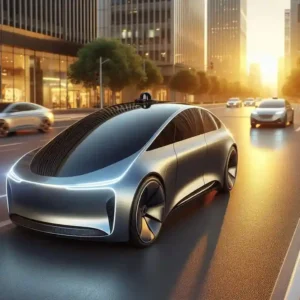
But here’s the catch: Full self-driving for personal cars? Still 5-7 years away. The technology works. The regulations don’t.
What you can expect: Delivery drones everywhere. Self-driving trucks on highways. Your city’s bus system might go driverless by 2028.
5. Your Next Teacher Might Be an AI (And That’s OK)
I tried an AI tutor last month. I told it “I want to learn basic Python, but I’m stupid.”
It didn’t judge me. It started with the absolute basics. When I got stuck, it explained it differently. When I got bored, it switched topics.
No human teacher can do that for 1,000 students at once.
By 2029, Personalized AI tutors will be common for K-12 education. Not replacing teachers — handling the repetitive stuff so teachers can actually teach.
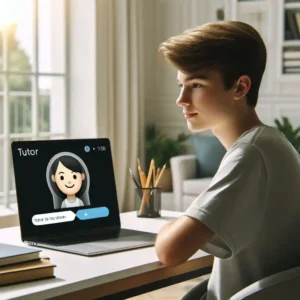
Real example: Khan Academy’s AI tutor “Khanmigo” is already in hundreds of classrooms. Students ask it questions like “why do I need to learn this?” and it gives real answers.
6. Your Job Title Probably Doesn’t Exist Yet
I asked ChatGPT, “What jobs will exist in 2030 that don’t exist today?”
Some answers that made me think:
AI Prompt Engineer (already exists, pays $150k+)
Digital Twin Architect (builds virtual copies of real buildings)
Autonomous Vehicle Fleet Manager (someone has to manage those robot taxis)
Legacy AI System Translator (converts old AI models to new ones)
By 2035: The concept of a “job for life” will be dead. Most people will have 5-6 different careers. Not jobs — careers.

What you can do now: Stop asking “what job is safe?” Start asking “What skills should I learn?” Adaptability is the new job security.
7. You’ll Work From Anywhere (Not Just Home)
I worked from a beach in Goa last year. Not a vacation. Actual work. Laptop, internet, coffee.

My team was in three different countries. We never met in person. Our project shipped on time.
By 2030, “Going to work” will sound as old as “going to the library to do research.”
But here’s the twist: Offices won’t disappear. They’ll become collaboration spaces. Places you go to meet people, not to sit at a desk.
What companies are already doing: Airbnb allows permanent remote work. Spotify has “Work From Anywhere.” These aren’t experiments anymore. They’re the new normal.
8. Your Health Will Be Tracked 24/7 (And You’ll Want It)
I wear a smartwatch that tracks my sleep, heart rate, and steps.
Last month, it warned me that my heart rate was irregular while I was sleeping. I ignored it. It warned me again. I went to the doctor.
Nothing serious. But the doctor said, “If this had been something, your watch would have caught it before you felt anything.”
By 2028, Wearable devices will detect diseases before symptoms appear. Your watch will literally save your life, and you won’t even know it until later.
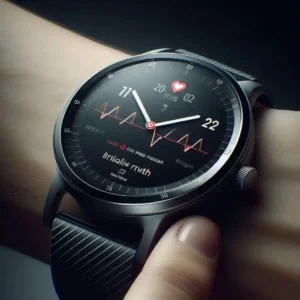
Real example: Apple Watch has already detected undiagnosed heart conditions in thousands of people. This is just the beginning.
9. The Metaverse Will Fail. AR Will Win.
Remember when everyone talked about the metaverse? Yeah. That’s not happening.
But Augmented Reality (AR)? That’s different.
I tried Meta’s new AR glasses (not released yet, but I got a demo). Information appears in front of you. Directions, translations, reminders. It doesn’t block your view. It adds to it.
By 2030, AR glasses will replace smartphones for many tasks. You’ll look at a restaurant and see reviews. You’ll look at a person and see their name (if they’ve shared it). You’ll look at a machine and see instructions.
The metaverse? Maybe for gaming. For daily life? No one wants to live in a virtual world. They want the real world with helpful information.
10. The Climate Will Get Tech’s Full Attention
This one gives me hope.
I visited a “solar farm” last year. Thousands of panels. Enough to power 10,000 homes. Built in 8 months.
By 2035, Solar and wind will be cheaper than fossil fuels everywhere on Earth. Not “as cheap.” Cheaper.

What’s already happening:
Electric vehicle batteries have dropped 90% in price since 2010
Solar panels are now the cheapest electricity source in history
China, the US, and Europe are investing billions in green tech
The problem: We’re still not moving fast enough. But for the first time, the technology is ready. We just need the will.
Part 2: What This Means For You Right Now
Skills That Will Matter (Not What You Think)
Everyone says, “Learn to code.” I disagree.
Here’s what actually matters for the next 10 years:
| Old Skill | New Skill |
|---|---|
| Memorizing facts | Knowing how to find information |
| Doing repetitive tasks | Automating repetitive tasks |
| Working alone | Working with AI |
| Following instructions | Asking better questions |
| Specializing in one thing | Learning new things quickly |
The most important skill: Learning how to learn. Seriously. The person who can pick up a new tool in a week will beat the person who mastered one tool 10 years ago.
5 Free AI Tools You Can Use Today
Instead of reading about the future, try it:
| Tool | What It Does | Link |
|---|---|---|
| ChatGPT | Answers questions, writes, and brainstorms | chat.openai.com |
| Google Gemini | Research, analysis, fact-checking | gemini.google.com |
| Microsoft Copilot | Built into Word, Excel, and PowerPoint | copilot.microsoft.com |
| Claude | Long-form writing, coding | claude.ai |
| Perplexity AI | Research with citations | perplexity.ai |
Spend 1 hour this week. Just play with one of them. That’s better than reading 10 articles about AI.
What I Got Wrong (And What Experts Say)
I asked two AI researchers: “What’s everyone getting wrong about the future?”
Response 1 (Google researcher): “People think AGI (super intelligent AI) is coming next year. It’s not. We’re still decades away from AI that can truly think like a human.”
Response 2 (Startup founder): “People underestimate how fast this is moving. What took us 5 years in the last decade will take 1 year in the next.”
Both can be true. A long way to go. But speed is increasing.
The One Thing Nobody’s Talking About
We’ve covered AI, AR, self-driving cars, and smart homes.
But here’s what keeps me up at night: digital addiction is going to get worse.
If AR glasses are amazing, we’ll never take them off. If AI is helpful, we’ll never think for ourselves. If everything is convenient, we’ll never struggle — and struggle is where growth happens.
I don’t have an answer. But I know the person who figures out “how to use technology without letting it use you” will be the most successful person in 2036.
FAQ – Real Questions People Asked Me
Will AI take my job?
Probably not. But someone who uses AI might. Learn the tools.
Should my child learn to code?
Yes, but not because they’ll be a programmer. Coding teaches logical thinking. That skill never goes out of style.
What’s the one technology to watch?
AI assistants that can take actions (book flights, send emails, schedule meetings). That’s coming in 2-3 years.
Is the future scary or exciting?
Both. But mostly exciting. Every major technology (electricity, the internet, and smartphones) went through a scary phase. This is no different.
What should I do today?
Pick one AI tool from the list above. Spend 30 minutes with it. That’s it.

Final Thoughts
My nephew built a website in 10 seconds.
When I was his age, I spent months learning BASIC on a computer with no internet.
The next 10 years will be weird. Wonderful. Scary. Amazing.
But here’s what I know for sure: The people who thrive won’t be the ones who predict the future perfectly. They’ll be the ones who stay curious, keep learning, and aren’t afraid to look stupid while figuring things out.
So try that AI tool. Ask that dumb question. Build that thing you’ve been thinking about.
The future isn’t something that happens to you.
It’s something you build, one small step at a time.
Your step today? Pick one tool. Spend 30 minutes. See what happens.
That’s how the next 10 years start.
More from Mag Tech Hub:
YouTube Guide – https://magtechhub.com/how-to-start-tech-youtube-channel-2026/
Facebook Money – https://magtechhub.com/honest-facebook-earnings-what-actually-works/